 German
 French
 Spanish
 Portuguese
 Russian
 Japan
 Italian

High-Temperature Single-Layer Silicone Duct Hose: The Definitive Industrial Guide
When industrial ventilation, automotive cooling systems, and air handling equipment operate under extreme thermal conditions and continuous mechanical vibration, standard ducting materials quickly degrade, crack, or leak.
The 4M Single-Layer Silicone Duct Hose is an engineered, heavy-duty solution designed to bridge high-temperature air handling units, blowers, and fixed ductwork while maintaining airtight integrity and superior flexibility.
What Is a Single-Layer Silicone Duct Hose?
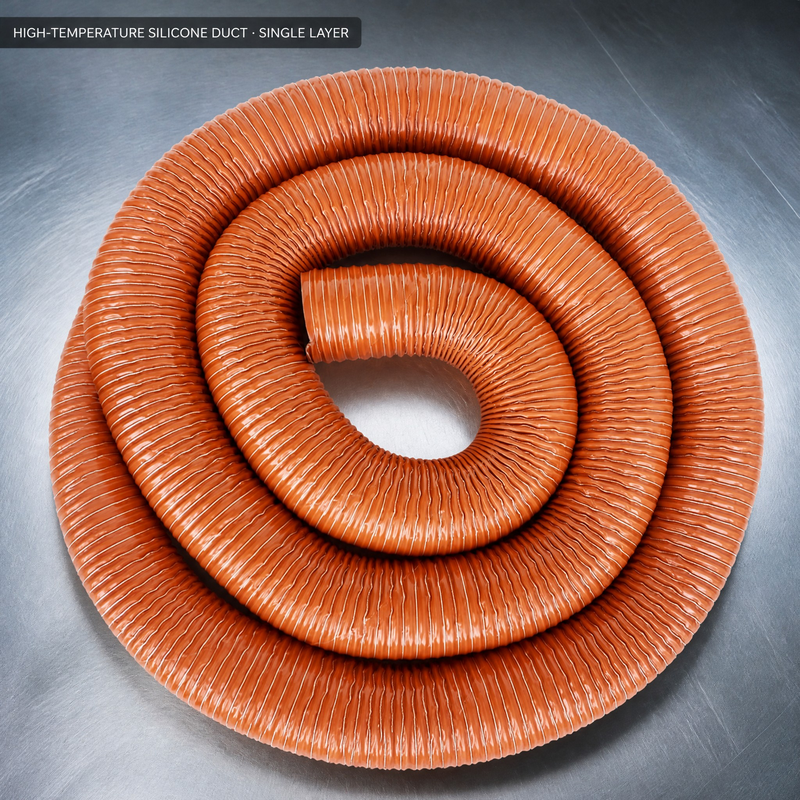
A single-layer silicone duct hose is a specialized high-temperature flexible conduit constructed from premium silicone-coated glass fiber fabric reinforced with an internal spring steel wire helix and external glass cord wrapping.
It provides an ultra-lightweight, kink-proof channel for transferring hot air, non-corrosive fumes, and industrial exhaust in temperatures ranging from -70°C to +260°C (-94°F to +500°F), with short-term resistance up to +310°C (+590°F).
Key Engineering & Material Specifications
Technical Parameter Specification / Performance Data
Material Construction 1-Ply Silicone-Coated Fiberglass Fabric
Internal Reinforcement High-Tensile Spring Steel Wire Helix
Outer Reinforcement High-Strength Glass Cord
Standard Length 4.0 Meters per piece (13.1 ft)
Diameter Range (ID) 16 mm to 254 mm (5/8" to 10")
End Finish Option Smooth cuff ends for clamp fastening
Working Temperature -70°C to ~ +260°C (Continuous)
Peak Temperature Up to +310°C (Intermittent)
Expected Lifespan 5 to 10 Years (Under standard operating conditions)
Safety & Durability Flame Retardant, Kink-Proof, Leak-Proof, Chemical Resistant
Core Advantages & Engineering Highlights
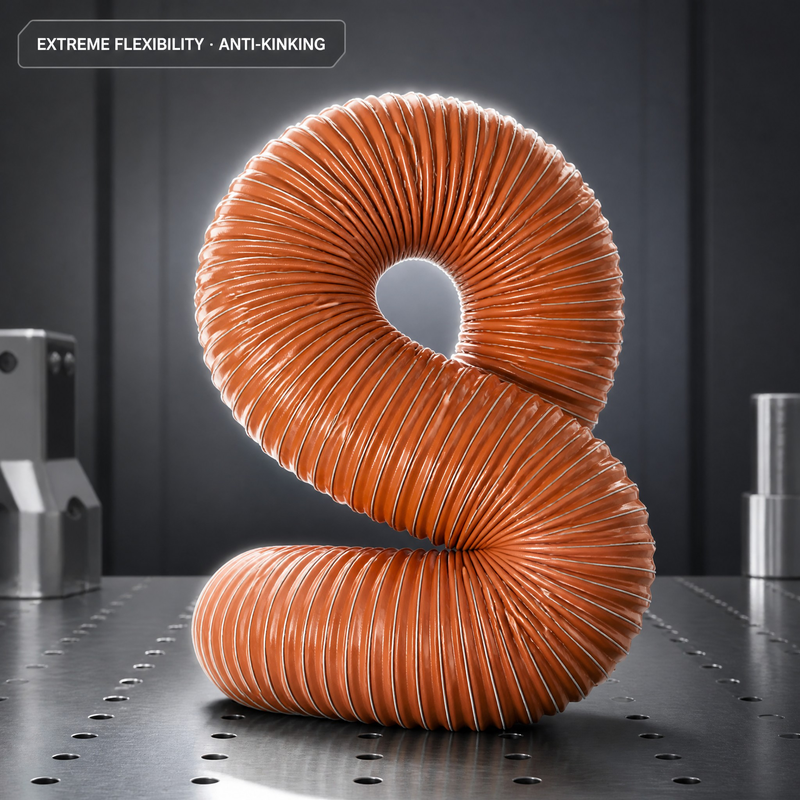
1. Extreme Flexibility with Anti-Kinking Design
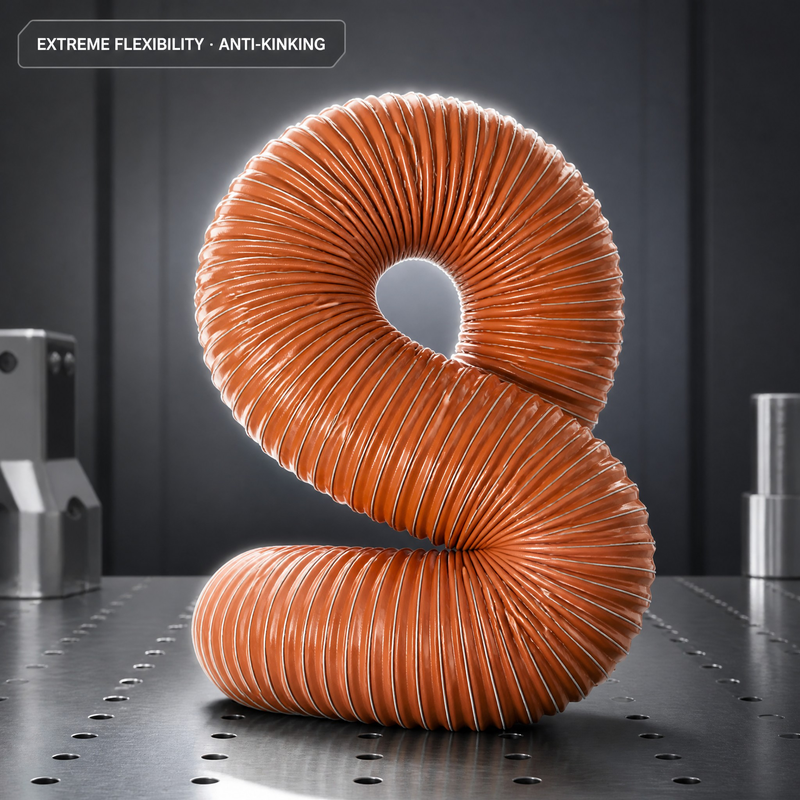
The precision-coiled spring steel wire helix supports the flexible silicone wall, allowing tight bend radii (even into an S-curve) without cross-sectional collapse or restricting airflow volume.
2. Smooth Cuff Ends for Airtight Clamping
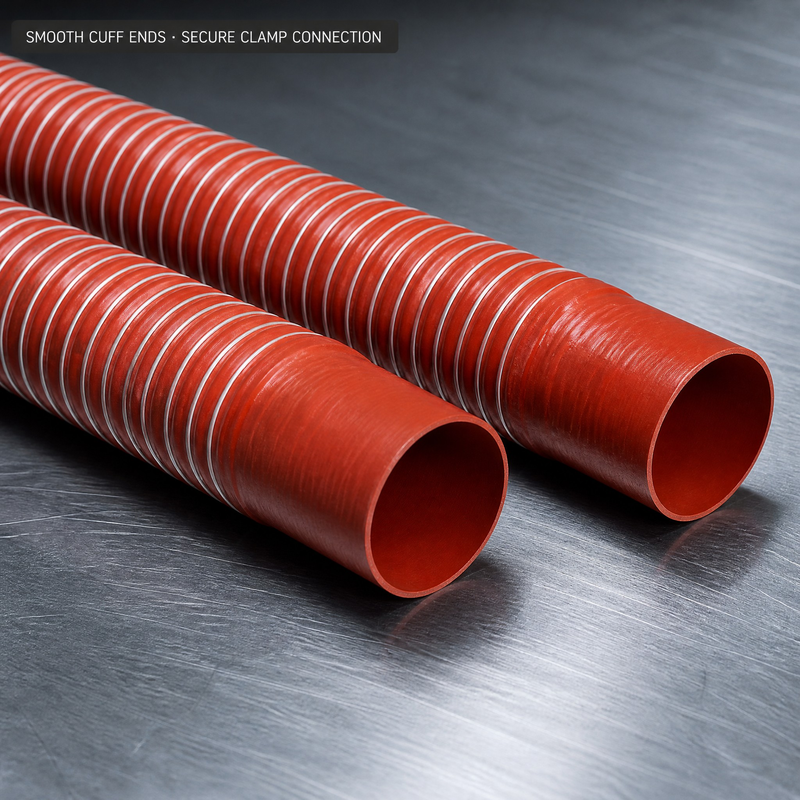
Available with smooth, unreinforced cuff ends that slide over rigid pipes, intake ports, or fan flanges seamlessly. This ensures a leak-free seal with standard worm-drive or bridge clamps without pinching or puncturing the fabric.
3. Superior Thermal Stability & Flame Retardancy
The single-ply fiberglass substrate combined with dense silicone elastomer delivers outstanding thermal stability. It does not harden or become brittle at sub-zero temperatures (-70°C) and will not soften or off-gas hazardous volatile compounds under continuous +260°C heat.
4. Vibration Dampening & Acoustic Isolation
Air handling units (AHUs), heavy-duty blowers, and extraction fans generate severe operational vibrations that damage rigid metal pipes. Installing a flexible silicone duct between moving equipment and fixed ducts isolates mechanical shock, eliminates pipe stress, and significantly reduces operational noise.
Primary Applications Across Industries
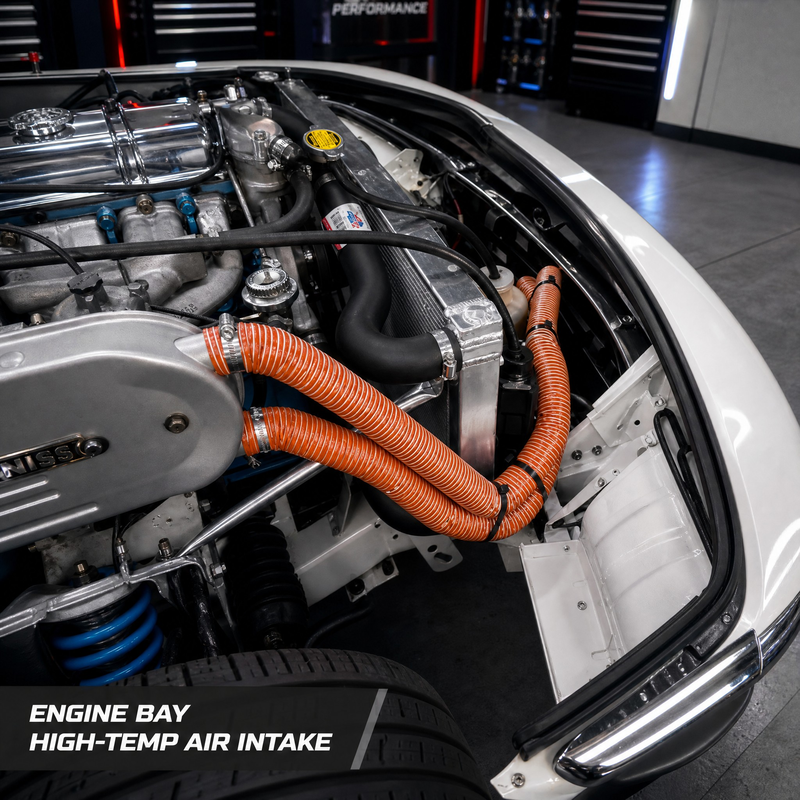
1. High-Performance Automotive & Engine Air Intake
Transfers forced induction air, turbocharger heat dissipation, and cool air intake directly into performance engines under extreme under-hood thermal conditions.
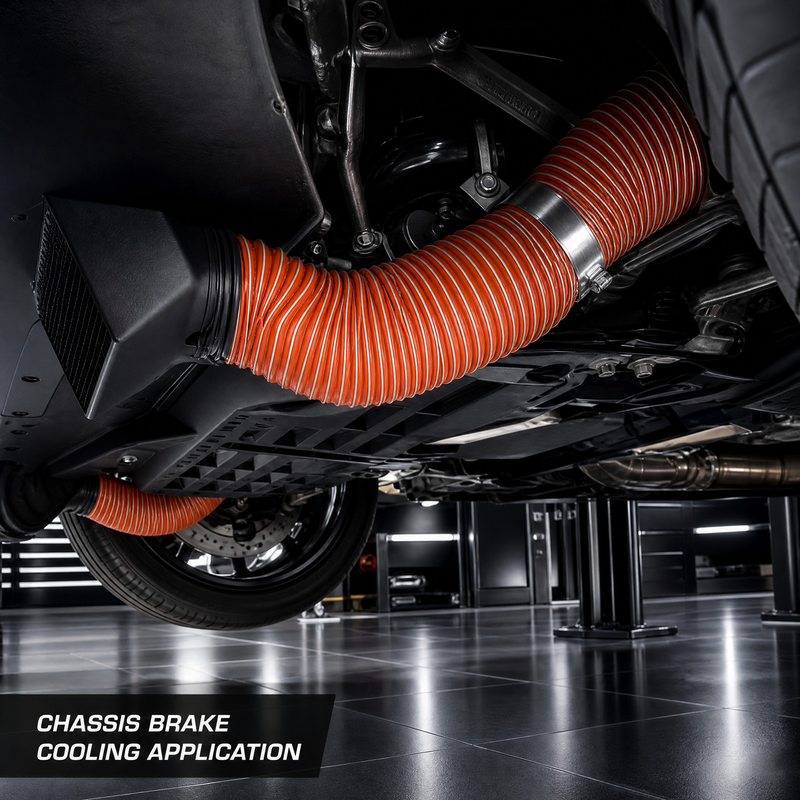
2. Chassis & Motorsport Brake Cooling
Directs high-velocity ambient air directly to brake rotors and calipers to eliminate brake fade during track and heavy-duty braking cycles.
3. Industrial HVAC & Granule Dryer Exhaust
HVAC & Commercial Buildings: Connects AHUs, roof exhaust fans, and supply plenums for vibration absorption.
Plastic Processing: Hot air feeding and hopper dryer exhaust extraction for dehumidifying resin dryers.
Chemical & Fume Extraction: Safe venting of light chemical vapors, soldering fumes, and paint booth exhaust.
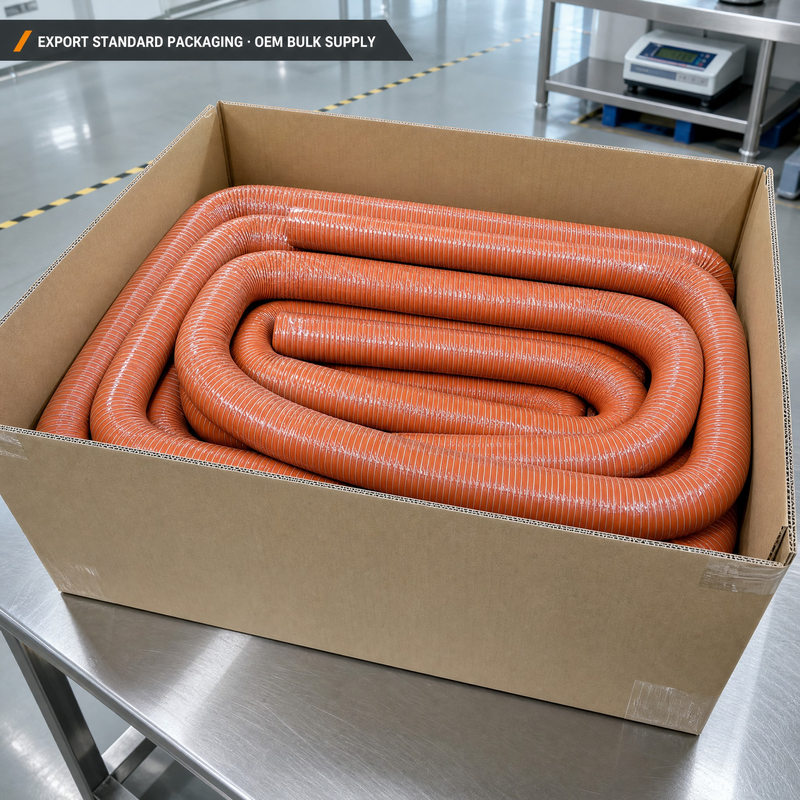
Quality Packaging & Global Export Supply
Each 4-meter length is carefully coiled, protected, and boxed in heavy-duty export standard cartons to prevent compression deformation or transit abrasion during international shipping.
Installation & Maintenance Best Practices
Maintain Proper Clearance: Ensure a minimum clearance between the flexible duct and nearby walls, structural columns, or sharp machinery edges to prevent outer abrasion from ongoing mechanical movement.
Avoid Extreme Chemical Immersion: While resistant to atmospheric chemicals and standard exhaust gases, avoid direct contact with highly concentrated oxidizing acids or aggressive organic solvents.
Respect Operating Limits: Do not exceed the continuous +260°C operating threshold for extended periods.
Use Proper Clamping Hardware: Fasten the hose with dedicated bridge clamps or lined worm-gear clamps positioned evenly over the smooth cuff ends.
Frequently Asked Questions (FAQ)
Q1: What temperature range can this silicone duct hose withstand?
A: The hose is rated for continuous operation from -70°C to +260°C (-94°F to +500°F), with short-term peak thermal resistance up to +310°C (+590°F).
Q2: What sizes and standard lengths are available?
A: The standard manufactured length is 4 meters (13.1 ft) per piece, with internal diameters (ID) ranging from 16 mm up to 254 mm.
Q3: Why is silicone coated fiberglass preferred over standard PVC or PU hoses?
A: Standard PVC and PU hoses fail rapidly above 80°C–120°C. Silicone coated fiberglass offers significantly higher thermal tolerance (up to 260°C continuous), superior flame retardancy, and 5–10 years of aging resistance against UV and ozone.
Q4: Can this hose be used for automotive brake cooling and engine intake?
A: Yes. Its light weight, extreme flexibility, and high heat resistance make it ideal for high-performance automotive chassis brake ducting and under-hood air intake routes.
 Send Email
 ECOOSI
 ECOOSI
 Jim5040
 ECOOSI